WoodLab STEM Kit - A Practical Response to Curriculum Reform in Latvia
Both the State Audit Office’s report on the quality of basic education and the wider discussions around the “Skola2030” (School2030) competence-based curriculum highlight the same core problem: ambitions in education are high, but teachers have not received sufficient, practical support in the form of ready-to-use teaching resources. Equal access to quality basic education is still not guaranteed – a child’s opportunities vary significantly depending on the school and municipality, and on the resources and support available there.
When the Skola2030 content had already been introduced in schools, the Latvian Wood Association started hearing the same message again and again:
teachers do not have the time or capacity to develop new teaching materials aligned with the updated curriculum on their own;
schools – especially in the regions – lack simple but high-quality practical tools that would make STEM subjects and transversal skills a real experience in the classroom.
Visits to schools and direct conversations with teachers clearly showed that the shortage of suitable materials is felt in everyday work. That is why we decided to respond with a concrete solution.
Sigita Alksne, Board Member of the association, explains:
"WoodLab STEM Kit is our practical response to the changes brought by Skola2030 – ready-to-use, hands-on materials that help schools develop both STEM learning and transversal skills. We took the Skola2030 guidelines seriously and looked for a way to bring them to life through tangible teaching materials. We have achieved a lot only because we worked together. So far, we have visited more than 150 schools and reached around 7,000 students across Latvia.
We believe that education should be strengthened through joint efforts – by industry, schools, NGOs and society. And we do not plan to stop. In parallel, we are already working on new materials and solutions that can enrich and diversify the learning process and ease teachers’ daily work in passing knowledge on to young people.”
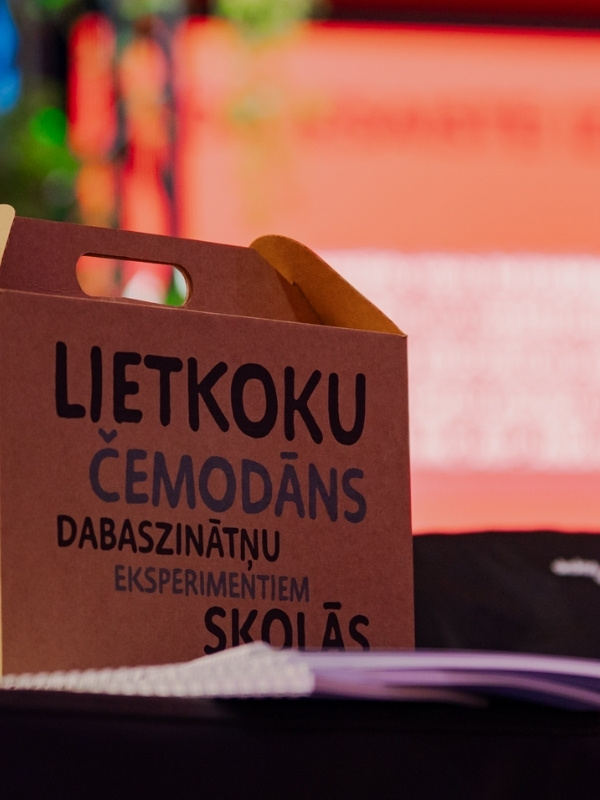
The story of the WoodLab STEM Kit
Looking for a practical way to support schools, we created the “WoodLab Stem Kit”:
a set of wood-based experiments that teachers can use for STEM activities in grades 5–12;
a methodological package with tasks and worksheets designed for classroom use;
step-by-step video instructions showing how to conduct the experiments in lessons.
Transversal skills are a central element in the Skola2030 curriculum, and we have deliberately embedded them into the design of the WoodLab Stem Kit:
students work in groups, share roles and agree on a plan of action – this builds cooperation and communication;
they plan, carry out measurements, compare results and draw conclusions – this develops critical thinking and problem-solving;
they see wood as part of a broader bioeconomy and sustainability story, deepening their understanding of Latvia’s natural resources and future career paths.
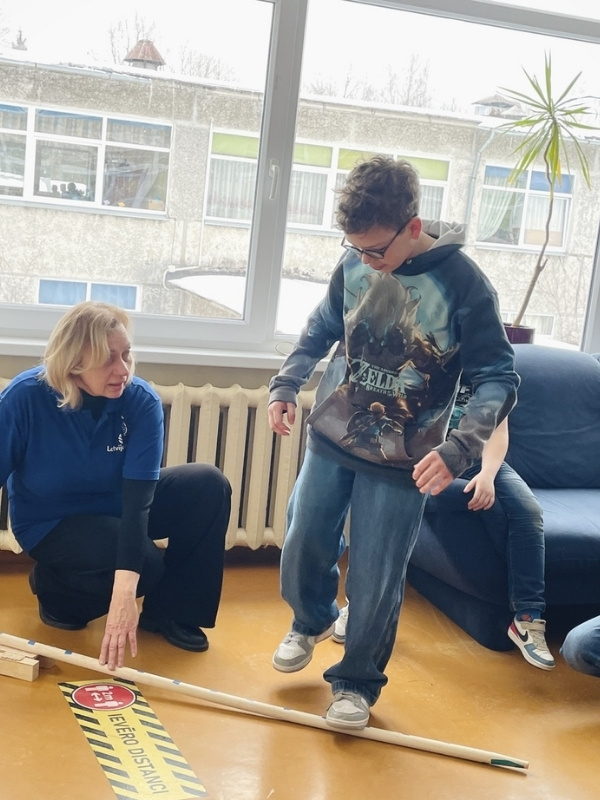
Impact In Schools
To date, we have visited more than 150 schools and worked with around 7,000 students.
Teachers have sent us hundreds of pieces of feedback:
the WoodLab Stem Kit can be easily integrated into the existing teaching process;
it does not disrupt lesson planning;
it does not require disproportionately large preparation time from teachers.
Guest lessons are described as interactive, engaging and discussion-driven – the experiments are accompanied by stories that connect them to everyday life and a wide range of professions.
Reducing The Gap Between Schools
The State Audit Office stresses that a child’s chances of receiving quality basic education depend heavily on where they study – lesson hours, support measures and material resources differ significantly between schools.
For this reason, we intentionally focus on schools in the regions. A strong sense of regional pride is visible among local forest and wood industry companies, which actively support the initiative in their municipalities – by financing suitcases, co-hosting activities, or helping to reach schools.
We cannot solve all systemic problems. However, we can help narrow the gap in access to practical teaching tools, especially in STEM subjects and regional schools.
Demand is so high that at times we literally feel “pulled in all directions”: feedback spreads organically, and we receive more and more invitations to deliver guest lessons and bring the WoodLab Stem Kit to new schools.
That is why we are gradually increasing the number of WoodLab Stem Kit ambassadors – experts who go to schools, lead experiments, and work with teachers to find the best ways to use the suitcase in their teaching.
Building on teachers’ experience and feedback, we continue to improve and expand the WoodLab Stem Kit – adding new tasks, games and solutions that respond to the needs of today’s classrooms.
We are convinced that inviting a wider part of society to engage in improving education will benefit everyone. Collaboration between education and industry can become a real bridge between curriculum content and a work-based understanding of professions.
The WoodLab Stem Kit is only a small part of the broader education story, but the strong demand for it sends a clear signal: Latvian schools need more practical, ready-to-use tools for teachers – and these tools can be created together.